This Week in Science is back with some fresh updates from neuroscience and health. Enjoy, and please share your opinion in the comments! Which of the latest discoveries did you find particularly exciting?
Brain oscillations may become less mysterious to science. A new study suggests that using sound to stimulate brain waves might improve sleep for people with dementia or cognitive decline, a common issue affecting up to half of dementia patients. Researchers from the University of Surrey and the UK Dementia Research Institute employed sound stimulation targeting alpha rhythms, brainwaves linked to memory and perception, as well as to the wake-sleep cycle. They used Alpha Closed-Loop Auditory Stimulation (aCLAS), where sounds were played in sync with the brain's alpha waves. This method influenced the speed of alpha rhythms based on the phase of the sound and the brain region involved.
This research highlights the importance of understanding and manipulating alpha oscillations for therapeutic purposes, especially as these oscillations slow in diseases like Alzheimer's. The study found that specific sound phases could prevent deeper sleep stages without waking participants, while others had no disruptive effect. The authors noted the potential of closed-loop approaches for further exploring neural oscillations and behavior. Future research will investigate if these techniques can enhance cognition and sleep, benefiting dementia patients.
Source: PLOS Biology
Metabolic health hand in hand with brain health. Metabolic syndrome, marked by at least three of these conditions—large waist circumference, high triglycerides, high blood pressure, high blood sugar, and low HDL cholesterol—affects one in four adults globally. While poor metabolic health is known to increase dementia risk, its impact on brain health in non-dementia individuals was unclear. Researchers analyzed data from 37,395 UK Biobank participants without dementia, finding 7,945 with poor metabolic health. The study linked poor metabolic health to:
- Reduced total brain and gray matter volumes, crucial for information processing.
- Increased white matter hyperintensities, indicators of vascular brain damage linked to dementia.
- Memory issues, shown by reduced hippocampal volume and poorer performance in cognitive tests of working and verbal declarative memory.
- Slower processing speed and poorer performance in tests of verbal/numerical reasoning, nonverbal reasoning, and executive function.
Lead author Danial Qureshi emphasized that poor metabolic health is associated with reduced brain volume and cognitive performance, potentially contributing to future dementia development. He noted that up to 40% of dementia cases might be preventable through lifestyle changes. Senior author Dr. Thomas Littlejohns highlighted the consistent negative impact of poor metabolic health on brain health across different ages, stressing the importance of better prevention and management of metabolic conditions. Madeleine Walpert from Dementia UK underscored the need for holistic treatment, addressing coexisting conditions to improve overall health and wellbeing. The UK Biobank data, combining brain imaging and cognitive tests, offers unprecedented insights into aging-related diseases.
Source: Diabetes Care
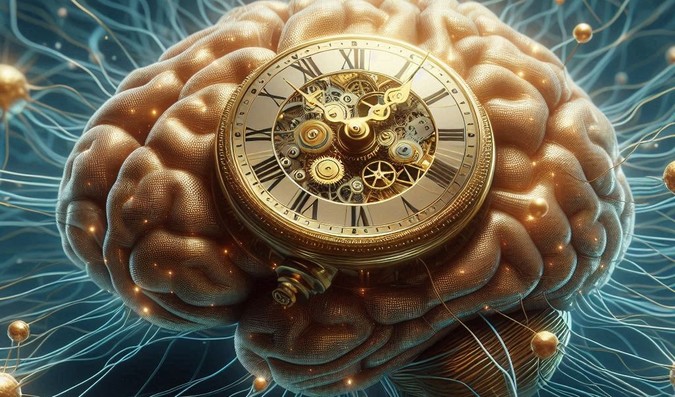
Brains have a tiny but very precise clock. Researchers at University of Utah Health have discovered that a specific population of "time cells" in mice is crucial for learning complex behaviors where timing is essential. These time cells fire in sequence to map short periods, acting like a second hand of a clock. However, the activity of these cells changes as animals learn to distinguish between different timed events, suggesting a more complex role than simple time tracking. Using advanced brain imaging combined with a time-based learning task, researchers observed that time cell activity patterns became more intricate as mice learned. Mice were trained to distinguish between variable timing patterns of an odor stimulus to receive a reward, akin to learning a simple form of Morse code. Initially, time cells responded uniformly to each odor pattern, but as the mice learned, distinct patterns of time cell activity emerged for each timed event. Interestingly, incorrect trials revealed that time cells fired in the wrong sequence, indicating that the proper order of time cell activity is vital for performing time-based tasks. Hyunwoo Lee, PhD, noted that selective activity became disorganized when mice made mistakes. Erin Bigus explained that temporarily blocking the medial entorhinal cortex (MEC), which contains time cells, prevented mice from learning complex time-related tasks, although they could still perceive and anticipate timing. These findings suggest that learning about brain processing of time could aid in the early detection of neurodegenerative diseases like Alzheimer’s, as the MEC is among the first brain areas affected by such diseases. Complex timing tasks could potentially serve as early diagnostic tools.
Source: Nature Neuroscience
Cover image: Cover image: 'Time cells' in the brain may be responsible for complex behaviors that involve timing. Image generated by Dall-E 3.
Stats
- Recommendations n/a n/a positive of 0 vote(s)
- Views 4869
- Comments 0