Welcome to our second edition of ‘This Week in Science’, where we share exciting developments in science and technology!
Antibiotics that kill bad bacteria but spare good ones. In a promising development for antibiotic therapy, researchers have created lolamicin, a novel antibiotic that selectively targets harmful Gram-negative bacteria without disrupting the beneficial gut microbiome. This innovation addresses a significant issue with current antibiotics, which often kill beneficial bacteria and can lead to secondary infections.
Lolamicin works by targeting the 'Lol system,' a set of proteins essential for the survival of pathogenic bacteria but absent in beneficial gut bacteria. In mice studies, lolamicin effectively treated infections with antibiotic-resistant bacteria and prevented gut microbiome disruption, demonstrating its potential to maintain gut health while combating infections.
The next steps involve extensive research to confirm lolamicin's efficacy and safety in humans. The journey from laboratory discovery to clinical use includes navigating regulatory approvals and securing funding, a process that could take several years.
Source: Nature
AI can help find a suitable antidepressant. Researchers at George Mason University's College of Public Health used artificial intelligence (AI) to assist patients in finding the most effective antidepressant for their specific needs. The innovative tool, accessible on MeAgainMeds.com, is designed to streamline the often challenging process of selecting the right antidepressant, which traditionally involves a lot of trial and error. By analyzing data from over 3.6 million patients and more than 10 million antidepressant prescriptions, the AI system provides personalized recommendations based on the patient's unique medical history.
Patients using the tool answer a series of anonymous questions about their medical background. The AI then processes this information, comparing it to the extensive dataset, to offer evidence-based suggestions for the most suitable antidepressant. This personalized approach not only aims to increase the likelihood of finding an effective medication quickly but also seeks to reduce the frustration and potential side effects associated with the traditional method of trying multiple drugs before finding the right one.
The development team, led by Dr. Farrokh Alemi, emphasizes the tool's potential to improve patient outcomes by providing tailored treatment options. However, they also highlight the importance of consulting with healthcare providers before making any changes to medication, as the AI tool is designed to complement professional medical advice rather than replace it.
Source: George Mason University
Extra thumb, anyone? Dani Clode, a collaborator within Professor Makin’s lab (Medical Research Council, Cognition and Brain Sciences Unit, University of Cambridge), has developed the Third Thumb, an extra robotic thumb aimed at increasing the wearer’s range of movement. This thumb, controlled by foot movements, challenges traditional views on prosthetics and expands users' hand functionality.
Attached opposite to the wearer's dominant hand, the "third thumb" enables enhanced manipulation of objects, with users able to integrate it into their natural movements through practice. Over the course of five days, the team tested 596 participants of different ages and backgrounds, and 98% of them were able to successfully manipulate objects using the Third Thumb during the first minute of use. The authors particularly emphasize the importance of testing such devices on a diverse and inclusive group of people at the earliest stage of the design process, so that the future product is functional to a wide range of users.
While such devices have potential to enhance the quality of life for individuals seeking to boost productivity, very importantly, they might offer people with disabilities novel means to engage with their surroundings.
Source: University of Cambridge
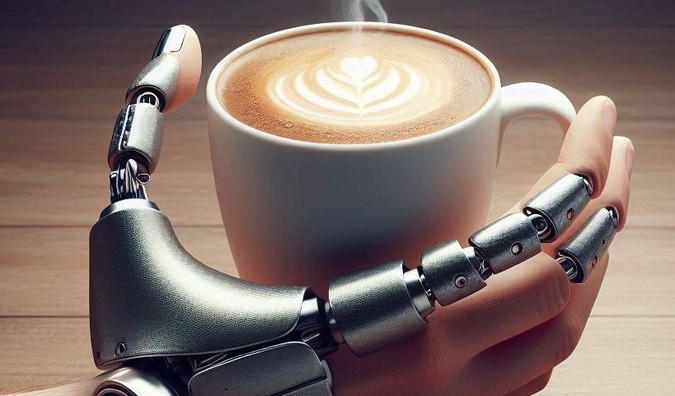
Cover image: Advanced hand prostheses may augment our bodies beyond biological limitations. Image generated by Dall-E 3.
Stats
- Recommendations n/a n/a positive of 0 vote(s)
- Views 1924
- Comments 1
Recommended
Post a comment
Comments
-
Marcel Machado Monday, 03 June 2024 - 10:57 UTC
It is interesting to know what is going be the future and to open our minds for theses changes