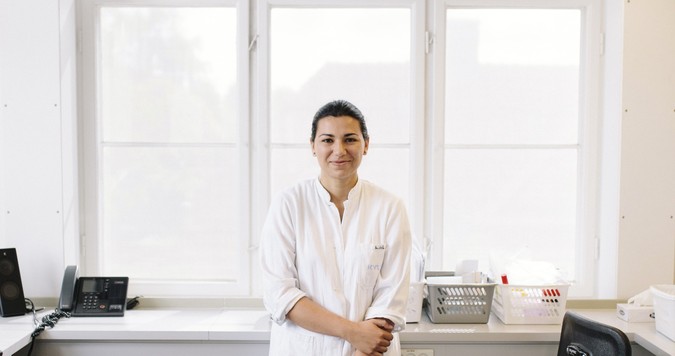
Dr. Michela Gambino is originally trained as a conservator of mural paintings and stones in Italy. After working as a conservator for a year, she decided to pursue a more scientific path and studied biotechnology. She completed her bachelor's and master's degrees in biotechnology for industry and the environment at the University of Milano. Following that, she continued with a Ph.D. in molecular and biological sciences, focusing on communities of microbes, so called biofilms. This topic perfectly bridges to her passion of cultural heritage, as biofilms can cause decay of statues or tombstones. After a 6-years deep dive into the biology of phages (viruses that specifically infect bacteria), working at the Institute for Veterinary and Animal Sciences at the University of Copenhagen, she recently started a new job that brought her old passion back on the table.
Where are you working right now, and what are your tasks?
I just got employed as a lecturer at the Institute of Conservation at the Royal Danish Academy of Architecture, Design, and Conservation. My role involves research as well as teaching microbiology for the conservation of cultural and natural heritage. My focus lies in understanding and mitigating the degradation caused by microorganisms such as viruses, bacteria, fungi, and phages. I have a 60% teaching and 40% research division in my job, allowing me to balance both aspects. This doesn’t mean that I am dividing every day according to that, but rather that I have the flexibility to organize my time according to the requirements of the school year. So I mainly conduct the research during the months when the students are on semester break or doing practical work.
Why do you think your work is important?
Cultural heritage holds significant historical value, and preserving it ensures that future generations can learn about our past. By studying microbiology and its impact on cultural and natural heritage, we gain insights into the degradation processes affecting various materials, such as paintings, wood, books and murals. This knowledge helps develop effective and preventative conservation strategies of these valuable artifacts and can lead to more sustainable solutions.
What excites or motivates you about your work?
What truly excites me is the emotional connection I have with cultural heritage. Since my early childhood, I have been deeply moved by visiting old places and museums as well as by the historical and aesthetic significance they hold. This personal involvement drives me to work for the preservation of cultural heritage. Knowing that my work can have a lasting impact on saving knowledge, art and historical memory for future generations further motivates me.
Besides the emotional aspect of your new job, do you see any other advantages compared to your previous position at the university?
One significant change is the permanent nature of my current role, which provides stability and a long-term commitment from both parties. Unlike in academia, where short-term contracts were the norm, I now have a stable salary and the freedom to think big and plan long-term projects. And the reduced stress associated with grant applications have been a welcome change. On top of that, the support and encouragement from the institute have boosted my confidence and commitment to my work.
Did those changes also influence your personal life?
Yes! For example, my commitment to learning the Danish language is much higher now that I know I will stay here for a long time. It helps to only have Danish colleagues and that I will have to teach in Danish soon. And this will, of course, open up a part of the Danish society that so far has been locked for me.
Furthermore, I've made a substantial investment by purchasing an apartment in Copenhagen. This decision is based on my confidence in staying here for an extended period and the assurance of a stable income. It provides me with a strong sense of security and long-term stability.
Do you have any tips for someone that considers moving away from academic research?
Networking is a crucial factor when it comes to career opportunities, at least here in Denmark. It's essential to reach out and connect with professionals whom you are interested in working with. Don't hesitate to ask questions and express your curiosity. In fact, consider arranging a casual meeting over a cup of coffee, to explore if the position aligns well with your aspirations. In my case, I had proactively visited the conservation school even before the position became available, which allowed me to establish a connection early on.
Thank you, Michela for your time and sharing such personal insights into your work life!
You can follow Michela on twitter (@michelagambino1) or LinkedIn.
Cover image: Michela Gambino. Picture taken by Daniel Hjorth.
Stats
- Recommendations n/a n/a positive of 0 vote(s)
- Views 3543
- Comments 0